


We do not build collective identity only through laws, flags, or family stories. We also build it through repeated acts. Today, many of those acts happen on screens. A morning check-in with a group chat, a weekly livestream, a shared hashtag during grief, an online prayer circle, a virtual vigil, or a coordinated post after a public event can all work like rituals. They are repeated, symbolic, and social.
Digital rituals are repeated online actions that help people feel part of a shared “we”.
We think this shift matters because identity is not just an idea in the mind. It is practiced. It is reinforced through rhythm, memory, and recognition. When many people repeat the same digital gesture at the same time, or with the same meaning, they create a field of belonging that feels real, even if they never meet in person.
We have seen this in ordinary life. A person joins a video call every Sunday with relatives across three cities. Another lights a candle at home while following a memorial streamed online. A team starts each Monday with the same short check-in ritual. These moments may look simple. Yet they organize emotion, attention, and connection.
Repetition creates belonging.
Why rituals still matter in digital life
Rituals help groups hold meaning over time. In older forms, they often relied on physical presence, shared objects, and common spaces. In digital life, the tools have changed, but the human need has not. We still look for signs that we belong, that others see us, and that our actions fit a larger story.
What changes online is speed and scale. A ritual can spread across countries in hours. It can be copied, adapted, and repeated by thousands. This gives digital rituals unusual force in shaping modern collective identity. They can gather strangers into temporary unity, or support long-term communities with shared habits.
We also notice that digital rituals reduce some barriers while creating others. A person who cannot travel may still join a ceremony online. A family can stay emotionally linked across borders. At the same time, access is uneven. According to World Bank data on digital access and use, nearly 3 billion people remain offline, and around 1.4 billion adults in many low and middle income countries do not use the internet. So, not everyone can enter the same digital spaces where identity is being formed.
How online repetition becomes shared identity
Not every repeated online act becomes a ritual. To shape identity, it usually needs meaning, emotion, and recognition by others. A habit becomes a ritual when people treat it as more than routine. They know what it stands for.
In our view, digital rituals shape collective identity through at least four paths.
- They mark who is inside the group and who is not.
- They create emotional synchrony, even at a distance.
- They turn private feeling into visible shared expression.
- They preserve memory through recordings, posts, and symbols.
When people repeat a phrase, wear the same color in a video call, post at a set hour, or join a common digital ceremony, they are not only communicating. They are signaling membership. Over time, this can become part of how they define themselves and others.
Collective identity grows when people repeatedly attach shared meaning to shared actions.
This helps explain why digital rituals can feel powerful even when they are quiet. A short typed message, sent at the same time each week, can carry more emotional weight than a long speech if it has become part of a group’s symbolic life.

What research tells us
Recent findings support what many people already feel in practice. In a metaverse-based ritual study with 68 university students, emotional engagement and ritual participation showed strong links with collective identity, while visible coordination, such as avatar synchrony or spatial proximity, was less predictive. That result is telling. It suggests that shared feeling and symbolic participation may matter more than perfect behavioral alignment.
We find that point very human. People do not need to move in exact unison to feel united. They need a shared frame of meaning. They need to feel that the act carries something larger than the act itself.
Another area where digital ritual clearly shapes identity is religious life. Pew Research findings on apps and websites in religious life reported that 16% of U.S. adults are heavy users of religious technology, while among people with high religious commitment, 42% are heavy users. We read this not as a simple tech trend, but as a sign that recurring digital practices can become part of how people live and express shared faith.
These practices may include prayer reminders, streamed services, text groups, study circles, or online observances. The tools vary. The ritual pattern remains.
Where digital rituals include, and where they exclude
There is another side to this story. Collective identity online is shaped not only by participation, but also by exclusion. If a person lacks access, they may be left outside the rituals that bind others together.
The gap is not small. The World Bank ID4D Global Dataset indicates that about 2.8 billion people lack access to a government-recognized digital identity for online authentication, and roughly 800 million lack any official ID. This affects civic participation, access to services, and the ability to join many digitally mediated forms of belonging.
Digital rituals can unite communities, but they can also mirror the inequalities already present in society.
We think this should make us more careful, not less hopeful. It reminds us that collective identity is always shaped by systems, access, and social structure. A ritual that feels open may still rest on hidden thresholds such as devices, literacy, internet quality, documentation, or time.
The emotional power of shared screens
Many people still ask whether online connection is “real enough.” In our experience, that question misses the point. The better question is this: what kind of presence is being created, and what does it do to the group?
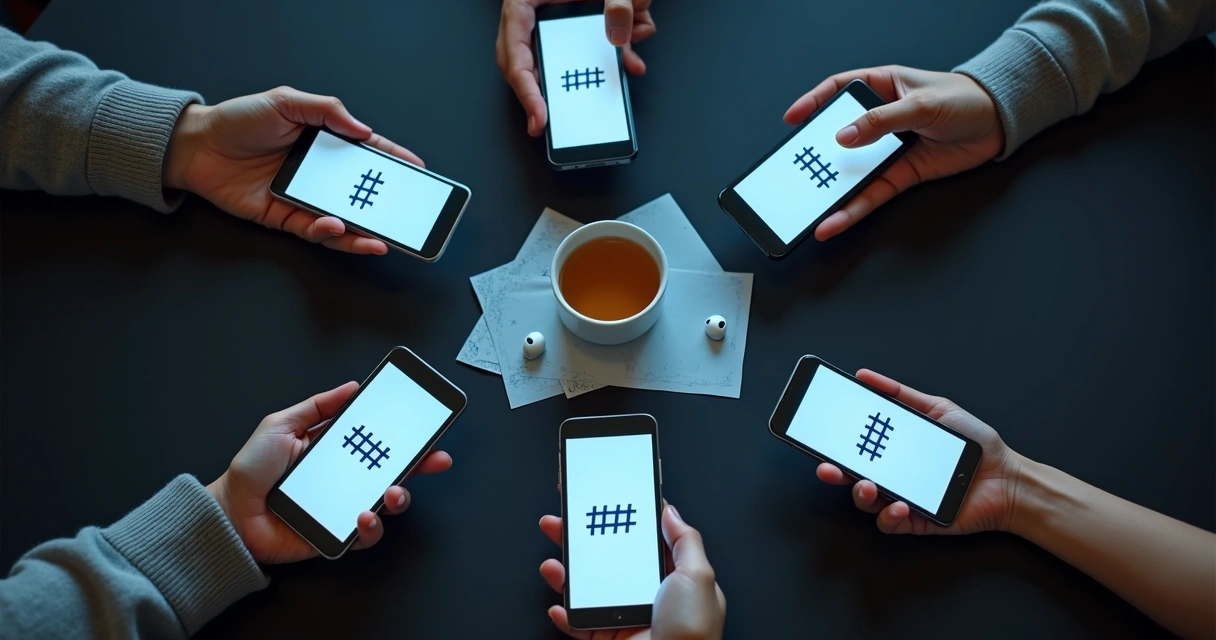
A shared screen can carry grief, joy, loyalty, protest, devotion, and care. It can also carry pressure, imitation, and fear of exclusion. Digital rituals are not automatically good. Like all rituals, they shape people by repetition. That is why awareness matters.
We have watched small online rituals steady people during uncertain times. A daily message in a family group can become a sign that everyone is safe. A regular community call can reduce isolation. A yearly digital remembrance can keep a story alive for younger members who never knew the person being honored. In these moments, identity is not abstract. It is felt in the body. A pause. A tear. A sense of being held.
How to read digital rituals with more maturity
We believe it helps to ask simple questions when we take part in digital rituals. Not to become suspicious of every online act, but to become more conscious of what we are reinforcing.
Some useful questions are:
- What shared meaning does this action carry?
- Who feels included by this ritual?
- Who may be left out, and why?
- Does this practice support reflection, or only reaction?
- Is the group becoming more responsible, or only more fused?
These questions help us see that modern collective identity is not formed only by ideas we declare. It is formed by patterns we repeat. The digital world has not ended ritual life. It has multiplied its forms.
Conclusion
Digital rituals are now part of how communities mark belonging, express memory, and shape shared identity. Their force does not come mainly from screens or novelty. It comes from repetition, emotion, and symbolism. When these elements come together, even small online acts can become socially powerful.
We think the deeper task is not to ask whether digital rituals are real, but whether we are practicing them with awareness. Modern collective identity is being written every day through tiny gestures, recurring signs, and shared moments online. Some of them heal. Some divide. Many do both at once. If we learn to read them well, we gain more choice in how we belong.
Frequently asked questions
What are digital rituals?
Digital rituals are repeated online actions with shared meaning. They can include virtual ceremonies, group check-ins, livestream gatherings, shared posts during public events, or recurring online prayers and memorials. What makes them rituals is not the device, but the symbolic and social meaning attached to the act.
How do digital rituals shape identity?
They shape identity by helping people feel part of a group. Repeated shared actions create familiarity, emotional connection, and visible signs of belonging. Over time, these patterns influence how people see themselves, their community, and their place within it.
Are digital rituals replacing traditional rituals?
In many cases, they are not replacing traditional rituals fully. They are extending them, adapting them, or standing beside them. Some communities blend in-person and online forms, while others use digital rituals when distance, health, or access makes physical gathering hard.
Why are digital rituals important today?
They matter today because much of social life now happens online. People maintain relationships, mark grief, celebrate milestones, express beliefs, and join public responses through digital spaces. These repeated acts help organize belonging in a world shaped by distance, speed, and constant connection.
Can digital rituals build stronger communities?
Yes, they can build stronger communities when they create shared meaning, regular contact, and emotional presence. They work best when people feel seen, included, and responsible toward one another. Still, they should be shaped with care, because access gaps and group pressure can weaken the sense of true belonging.