


Volunteer and nonprofit teams often gather around a shared cause. That shared cause can create warmth, trust, and real care. Still, in our experience, good intentions do not prevent hidden group patterns. Sometimes two or three people start acting as a quiet unit. Other times, staff and volunteers split into unspoken camps. Nothing is said out loud, yet everyone feels it.
Hidden alliances are informal bonds that quietly shape influence, trust, and decisions inside a team.
We usually notice them first through atmosphere, not policy. A meeting feels tight. A suggestion is ignored until one person repeats it. New members stay polite but distant. Small scenes. Big meaning.
When we talk about hidden alliances, we are not accusing people of bad faith. We are naming a pattern. In many service-driven teams, people protect those they rely on. They defend old friends, key donors, founding members, or overworked staff. This can happen without any plan to exclude others.
Why hidden alliances appear
Teams are living systems. People do not enter them as blank slates. They bring loyalty, past stress, shared history, and private fears. In nonprofit settings, this is often stronger because the work carries moral weight. People may think, “We are here for a good reason, so our bond must be right.” That idea can block honest reflection.
We have seen hidden alliances grow from several common roots:
Long friendships that existed before the team formed.
Shared pressure between people who carry too much work.
Status gaps between paid staff, board members, and volunteers.
Unclear authority about who decides what.
Past conflict that was never fully addressed.
A qualitative study of a large Spanish nonprofit found that paid staff reported higher levels of task, process, status, and relationship conflict than volunteers. It also pointed to role ambiguity, unclear decision boundaries, and status differences. We see these conditions as fertile ground for hidden alliances, because people often seek safety in smaller trusted circles when roles feel blurred.
Unclear roles invite quiet coalitions.
Once that starts, the alliance may not look dramatic. It may simply control the flow of information, shape who gets heard, or decide in advance what the wider group will later “approve.”
What hidden alliances look like in daily team life
Most teams do not spot this pattern because it rarely announces itself. It hides in routine moments. A coordinator checks with the same two people before every decision. A board member defends one volunteer no matter what happens. Staff members use language that volunteers do not understand, then move on quickly. These are small acts, but together they form a map of belonging and exclusion.
We once observed a team preparing a community event. On paper, everyone had a voice. In practice, three long-time members spoke before each meeting in private. During the meeting, they looked open and kind. Yet every new idea had already lost its chance before it entered the room. No one was openly hostile. Still, others stopped bringing ideas.
A hidden alliance often shows itself less through conflict and more through repeated patterns of who gets included, backed, or bypassed.
Some signs are easy to miss at first:
The same people always support each other, even when facts are weak.
Decisions seem pre-made before formal discussion begins.
Some members receive information earlier than others.
Newcomers struggle to enter real influence, even when welcomed socially.
Disagreement with one person quickly becomes tension with a whole cluster.
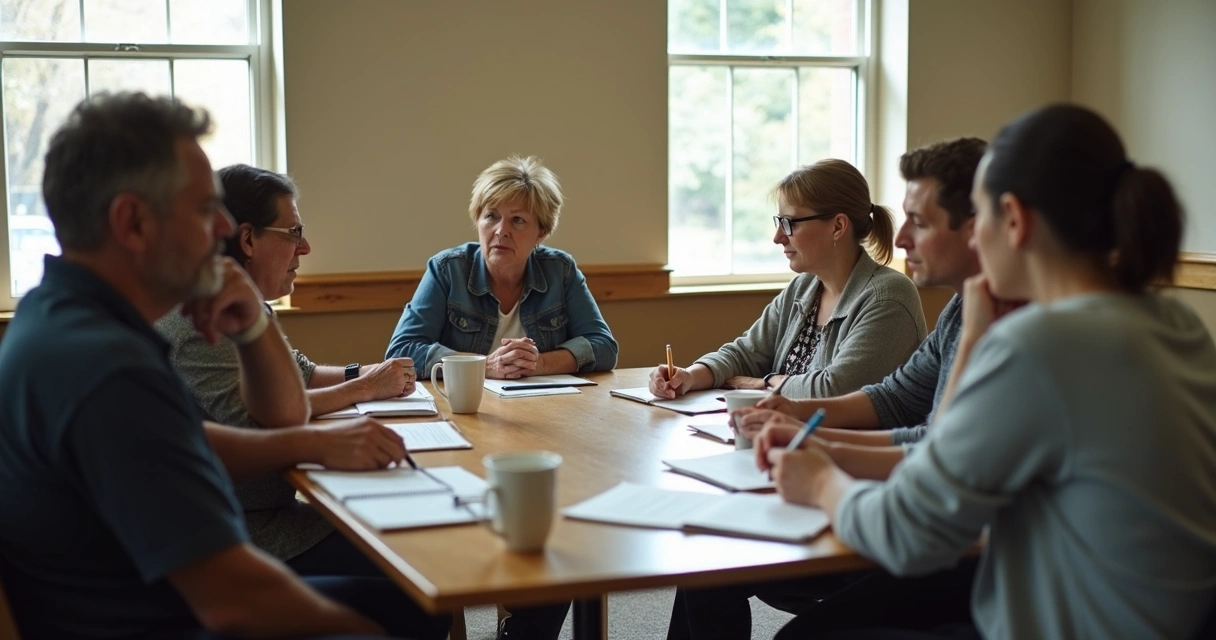
Why this matters for trust and governance
Hidden alliances do more than hurt feelings. They alter judgment. Teams may start protecting relationships over mission, or silence concerns to avoid upsetting an inner circle. That can damage trust, governance, and continuity.
A comparative case study of five Belgian nonprofits identified different leadership coalition patterns and found that governance quality was higher where there was no dominant covert coalition and where influence was not totally diffused. We take this as a useful warning. When one quiet bloc captures decision power, the team narrows. When influence spreads with no real structure, confusion grows.
In daily work, the effects may include:
Lower psychological safety in meetings.
Slow or distorted decision-making.
Private resentment that later turns into open conflict.
Withdrawal from volunteers who once cared deeply.
Mission drift caused by loyalty to people over shared purpose.
We think one of the saddest effects is silent disengagement. People do not always resign loudly. Sometimes they just stop offering their full presence. They do what is asked. Nothing more.
How to name the pattern without creating blame
This part requires maturity. If we accuse people too fast, the team becomes defensive. If we stay vague, nothing changes. The better path is to describe behavior and structure, not attack character.
We can start with grounded questions:
Who tends to speak to each other before group decisions?
Who gets trusted quickly, and who must keep proving themselves?
Where are the decision boundaries still foggy?
Which tensions are talked about privately but not publicly?
These questions help a team shift from suspicion to observation. That matters. The goal is not to shame close relationships. Teams need trust. The goal is to prevent trust from hardening into exclusion.
When we describe patterns instead of attacking people, teams are more likely to face what is happening.
It also helps to separate three layers of team life:
Formal structure, such as roles, reporting lines, and meeting rules.
Informal influence, such as friendships, history, and emotional loyalty.
Unspoken meaning, such as fear of conflict, guilt, or old wounds.
Real change usually begins when a team can admit that all three layers exist at once.

Practical ways to respond
Not every alliance must be broken. Some simply need light, limits, and better structure. In our experience, teams improve when they make influence more visible and decisions more shared.
Here are useful steps:
Clarify who decides, who advises, and who must be informed.
Rotate speaking order in meetings so the same voices do not set the tone first.
Create direct onboarding for new volunteers, including informal norms.
Review recurring side conversations that shape formal outcomes.
Use periodic check-ins about trust, fairness, and belonging.
Sometimes one honest sentence changes the room. “We notice that some decisions seem settled before meetings. Can we talk about how that happens?” Simple. Respectful. Clear.
We also think leaders should watch their own bonds. Every leader has preferences. That is human. Trouble starts when those preferences become a hidden center of power.
Conclusion
Hidden alliances in volunteer and nonprofit teams are rarely just personal issues. They are signs of how the whole system is organizing safety, influence, and belonging. When we learn to recognize them, we do not weaken the team. We give it a better chance to become fair, mature, and honest.
Healthy teams allow trust, but they do not let trust become a private gate. They make room for history, but they are not ruled by it. That balance takes work. It also builds stronger service, clearer governance, and more human relationships.
Frequently asked questions
What is a hidden alliance in teams?
A hidden alliance is an informal bond between team members that quietly affects decisions, support, and access to influence. It is usually not written into the structure, but people feel its impact through repeated patterns of inclusion or exclusion.
How to spot hidden alliances?
We can spot them by watching patterns. Notice who speaks before decisions, who always backs whom, who gets early information, and whose ideas gain traction only after approval from a small inner group. Repetition is the clue.
Why do hidden alliances form?
They often form because people seek safety, trust, and predictability. Shared history, unclear roles, status gaps, old conflict, and pressure can all push people to rely on smaller circles inside the larger team.
How can hidden alliances affect teamwork?
They can reduce trust, narrow participation, and distort decision-making. Some members may feel unheard or sidelined, while a small group gains more informal power than the structure openly admits.
What to do if I find one?
Start by naming the pattern with care. Focus on behaviors, meeting flow, access to information, and role clarity rather than blaming people. Then adjust structures so influence becomes more transparent and shared.